Send the request basics
Share the affected stair or landing, safe photos, current use, known reports, access constraints, and who can approve evaluation or repair work.
A soft landing, loose railing, broken corner, or stain below an exterior stair can involve more than the visible surface. AWC reviews the walking route, supports, attachments, water details, adjacent finishes, and access plan before defining the repair boundary.
Licensed general contractor · San Diego County
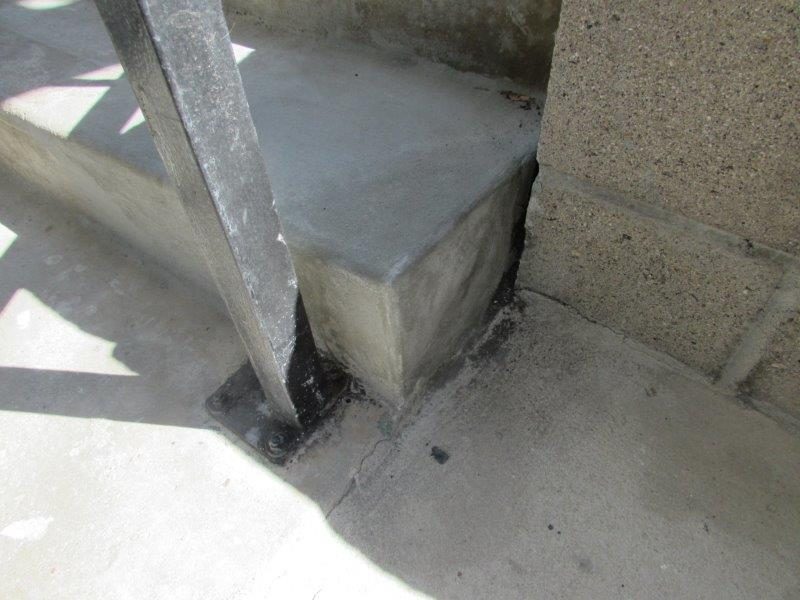
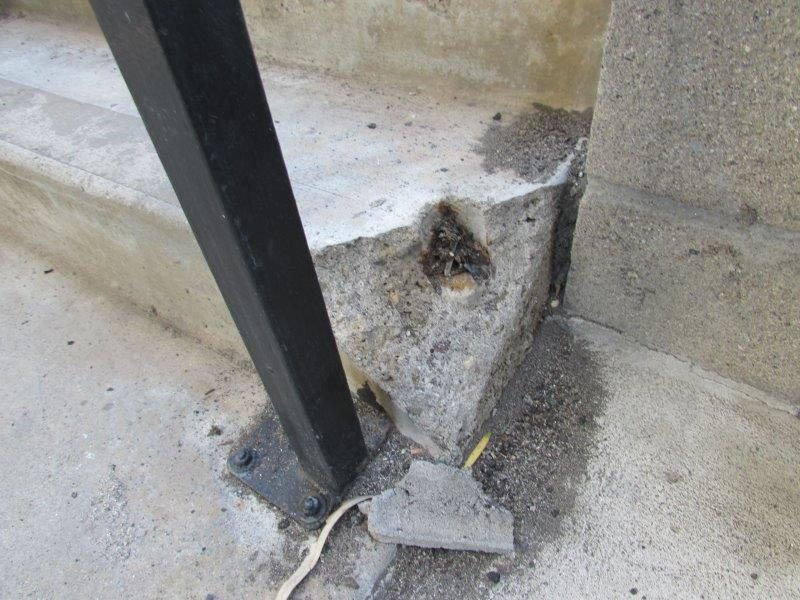
AWC project photo showing the damaged concrete stair corner beside a black railing post before the repair.
The matching AWC project photo shows the rebuilt edge after forming and patch work. Another property still needs its own condition and method reviewed.
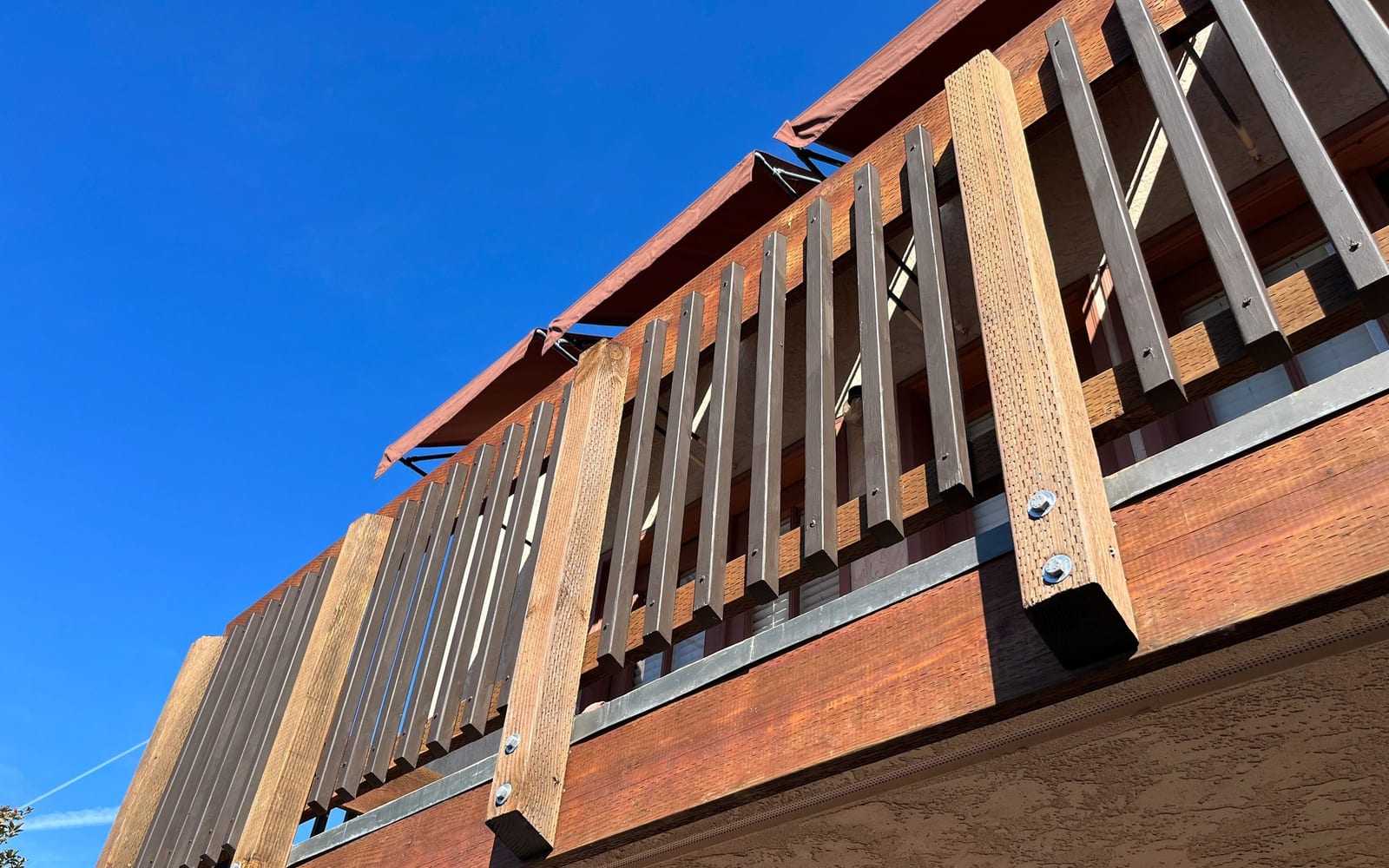
This separate AWC elevated-assembly photo illustrates finish and edge coordination adjacent to stair work. It is not part of the concrete stair-corner pair.
Call AWC or use the project request form to share the address, safe photos, affected route, property type, and known access restrictions. If the stair or railing appears unstable, restrict use and follow responsible property-specific direction.
Submitting a request does not confirm an appointment, price, dispatch or work authorization.
Open the AWC request form in a separate page ↗
Loading the repair request form…
Choose the closest service, or Other, and describe the repair. You can add one useful photo or report.
Service-contact and optional marketing choices are separate in the form. Review them before submitting.
Exterior stairs connect structure, walking surfaces, railings, coatings, walls and drainage in one heavily used assembly. A patch can miss the reason damage developed, while an open-ended proposal can leave owners unsure what is included. AWC starts by identifying the observed symptoms, affected areas, property use, access limits and available reports. The goal is a practical construction scope with stated assumptions, exclusions and next decisions. Photos help with initial fit, but they do not establish concealed framing condition or the property-specific requirements that may govern the work.
Movement, softness or surface failure needs restricted use and responsible review. The visible area alone cannot show the condition of supports, sheathing, connections or surrounding water details.
Understand this repair ↗A moving railing may involve the rail, post, attachment, substrate or concealed deterioration. The repair should define what is retained, opened, replaced and refinished.
Understand this repair ↗Staining can point to a drainage or waterproofing concern, but the source may be elsewhere. Review transitions, edges, penetrations and adjacent walls before selecting a surface treatment.
Understand this repair ↗Cracking, spalling or an uneven transition needs context: movement, drainage, reinforcement, substrate, adjacent soil and access all affect whether localized repair is suitable.
Understand this repair ↗Managers and boards need a repair path tied to the actual report, affected elements, access plan and approval process—not a generic stair price.
Understand this repair ↗When residents depend on the stair, phasing and alternate access can shape the work as much as the repair itself. Plan restrictions before demolition begins.
Understand this repair ↗Treads, landings and transitions need their own condition review. Surface appearance alone cannot establish support.
Rails, posts, stringers and wall connections depend on the supporting material and the attachment details.
Landings, penetrations and adjacent walls can direct moisture toward concealed components. Include those interfaces in the repair plan.
The owner and responsible professionals need a plan for access restrictions, resident movement and any required design or inspection.
One documented repair plan for the stair, landing, railing, water details and surrounding finishes.
This AWC project-photo pair shows one localized concrete stair corner before and after forming and patch work. A separate AWC railing and walking-surface photo adds adjacent finish context but is not part of the same repair. The images support a narrow lesson about defining the damaged area, repair boundary and finish interface; they do not establish the condition or appropriate method for another stair.
Real AWC material · Clearly stated limitsLearn how AWC scopes exterior stair, landing, railing, framing, waterproofing and finish repairs for San Diego properties.
Read the guideA practical guide to soft wood, peeling finishes, stains and concealed-condition planning at exterior stairs and landings.
Read the guidePlan exterior stair landing leak repairs by reviewing surfaces, edges, walls, penetrations, drainage and concealed substrate risk together.
Read the guidePlan loose, corroded or damaged exterior stair railing repairs around attachments, substrates, finishes and occupied-property access.
Read the guidePhotos can help confirm initial fit and show visible surfaces, access and symptoms. They cannot establish concealed framing, attachment, structural capacity, water source or the appropriate repair design. Detailed, water-related, occupied or multi-trade stair work may need the $250 Site Evaluation + Written Bid Package before responsible pricing. The $250 is credited back if the construction project is approved within 30 days.
Not necessarily. Movement can come from the rail, a post, fasteners, the attachment substrate or concealed deterioration. The surrounding landing, edge, wall or waterproofing may need controlled opening before the attachment can be defined. AWC scopes the visible railing work and the access needed to evaluate its support without claiming a hidden condition from movement alone.
AWC evaluates exterior stair projects involving wood framing and finishes, metal railing coordination, concrete repair, waterproofing, stucco and related trades when the work fits its construction scope. The correct approach depends on the actual assembly and condition. Specialty fabrication, engineering, hazardous-material work or other services may require separate qualified parties and written coordination.
A coating may be one part of a repair, but it cannot correct every water path or damaged substrate. Edges, wall transitions, penetrations, drains, cracks, thresholds and concealed layers can matter. AWC reviews the broader assembly and defines what will be opened, prepared, repaired and tied together before representing a coating as part of the solution.
Send the visible condition, property location and useful photos. AWC reviews the request and explains the next appropriate step.
If the condition needs field verification, AWC may recommend the $250 Site Evaluation + Written Bid Package. The $250 is credited if the construction project is approved within 30 days.